
Sozni GI Craft Product Development Process
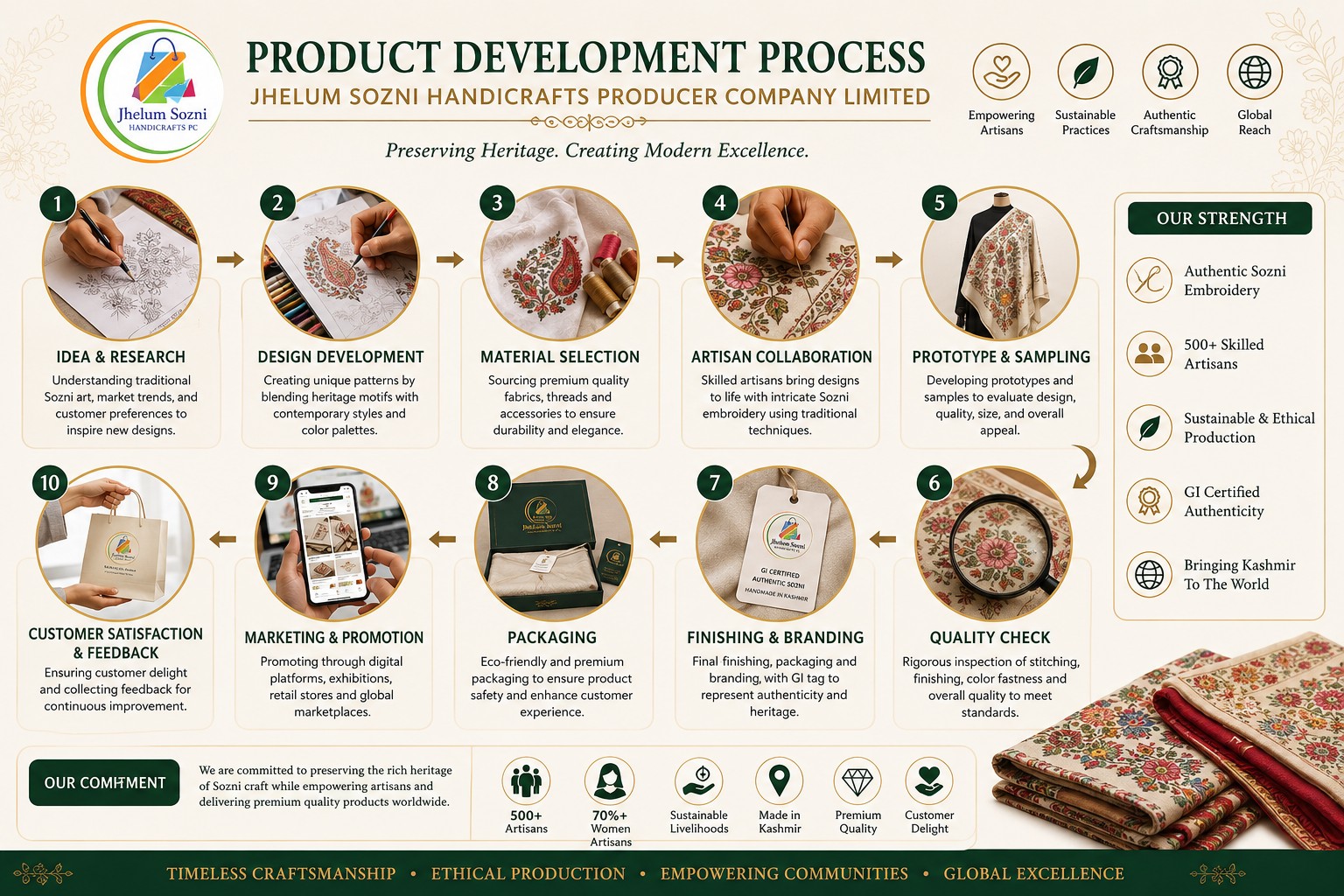
Preserving Heritage, Creating Modern Excellence
Sozni embroidery is one of the most delicate and prestigious handicrafts of Kashmir, renowned for its intricate needlework, artistic excellence, and cultural significance. Recognized under the Geographical Indication (GI) tag, Sozni embroidery reflects centuries of craftsmanship passed down through generations. The product development process combines traditional techniques with contemporary design innovation to create products that meet modern market demands while preserving the authenticity of this timeless craft.
1. Understanding the Craft Heritage
The product development process begins with understanding the historical, cultural, and artistic significance of Sozni embroidery. Artisans and designers study traditional patterns, motifs, and embroidery techniques that have defined Kashmiri craftsmanship for centuries.
This foundation helps ensure that new product developments retain the originality and heritage value of the craft while appealing to contemporary consumers.
2. Design Development and Innovation
Design development is carried out through collaboration between experienced artisans, designers, and craft experts. Traditional Sozni motifs are carefully adapted into modern product formats while maintaining their cultural identity.
Common motifs include:
-
Paisley (Badam) Patterns
-
Floral and Botanical Designs
-
Chinar Leaf Motifs
-
Geometric Patterns
-
Traditional Kashmiri Decorative Elements
These motifs are incorporated into products such as shawls, stoles, apparel, home furnishings, fashion accessories, and lifestyle products.
3. Selection of Premium Raw Materials
The quality of Sozni embroidery depends significantly on the materials used. Only high-quality raw materials are selected to ensure durability, elegance, and authenticity.
Materials commonly used include:
-
Fine Silk Threads
-
Pashmina Fabric
-
Woollen Fabrics
-
Cotton Fabrics
-
Silk and Silk Blend Textiles
Wherever possible, materials are sourced locally to support regional suppliers and maintain traditional production practices.
4. Artisan Engagement and Skill Development
The success of Sozni embroidery lies in the expertise of skilled artisans. Master craftsmen contribute their knowledge, creativity, and precision throughout the development process.
Regular training and skill upgradation programmes are organized to:
-
Improve embroidery techniques
-
Introduce contemporary design trends
-
Enhance productivity and quality
-
Encourage participation of young artisans and women artisans
These initiatives help preserve traditional knowledge while ensuring the sustainability of the craft.
5. Prototype Development
Before commercial production begins, sample products and prototypes are developed for evaluation and refinement.
The prototype stage focuses on:
-
Design Accuracy
-
Embroidery Placement
-
Colour Coordination
-
Product Functionality
-
Overall Aesthetic Appeal
Feedback from artisans, designers, and market experts is incorporated before finalizing the product.
6. Quality Assurance and Inspection
Every Sozni product undergoes rigorous quality checks to ensure superior craftsmanship and customer satisfaction.
Quality parameters include:
-
Precision of Embroidery
-
Thread Strength and Durability
-
Fabric Quality
-
Colour Fastness
-
Finishing and Presentation
Only products meeting established quality standards proceed to the market.
7. GI Compliance and Product Authentication
Products developed under the Sozni GI framework follow established standards that preserve the originality and identity of the craft.
GI compliance helps:
-
Protect traditional knowledge
-
Ensure product authenticity
-
Prevent imitation and misuse
-
Enhance consumer confidence
Appropriate branding and product documentation further strengthen market credibility.
8. Sustainable and Ethical Production Practices
Sozni embroidery is a labour-intensive handmade craft that requires patience, precision, and artistic dedication. Production is carried out through ethical and sustainable practices that support artisan welfare.
The process emphasizes:
-
Fair Wages for Artisans
-
Safe Working Conditions
-
Gender Inclusion
-
Sustainable Livelihood Creation
-
Responsible Resource Utilization
These practices contribute to long-term social and economic development within artisan communities.
9. Marketing and Market Linkages
Finished products are promoted through various marketing channels to reach a wider audience and create better income opportunities for artisans.
Marketing initiatives include:
-
National and International Exhibitions
-
Trade Fairs and Buyer-Seller Meets
-
E-Commerce Platforms
-
Social Media Marketing
-
Retail Stores and Luxury Boutiques
-
Institutional and Export Markets
These platforms help showcase the uniqueness of Kashmiri Sozni embroidery to customers across the world.
10. Continuous Improvement and Product Diversification
Market trends, consumer preferences, and customer feedback are continuously monitored to support innovation and product diversification.
This process enables:
-
Introduction of New Product Categories
-
Improved Product Quality
-
Enhanced Design Appeal
-
Greater Market Competitiveness
While innovation is encouraged, the traditional identity and cultural value of Sozni embroidery remain at the core of every product.
Conclusion
The Sozni GI Craft Product Development Process is a harmonious blend of heritage preservation and modern innovation. Through skilled artisans, premium materials, quality assurance, ethical production, and strategic marketing, Sozni embroidery continues to thrive as a symbol of Kashmir’s rich cultural legacy. The process not only safeguards traditional craftsmanship but also creates sustainable livelihoods and new opportunities for artisan communities in an evolving global marketplace.